
Rio Negro Silky Anteater
Cyclopes ida
Classification
- Class
- Mammalia
- Order
- Pilosa
- Family
- Cyclopedidae
Cyclopes didactylus, couramment appelé Myrmidon, Fourmilier nain, Petit fourmilier ou Lèche-main (en Guyane), est une espèce de la famille des Cyclopedidae. Exclusivement arboricole, il a une queue préhensile. Répartition Ce taxon se rencontre dans les pays suivants : Belize, Bolivie, Brésil, Colombie, Costa Rica, Guatemala, Guyana, Guyane, Honduras, Mexique, Nicaragua, Panama, Pérou, Suriname, Trinité-et-Tobago, Venezuela, Équateur.
The silky anteater, also known as the pygmy anteater, has traditionally been considered a single species of anteater, Cyclopes didactylus, in the genus Cyclopes, the only living genus in the family Cyclopedidae. Found in southern Mexico, and Central and South America, it is the smallest of all known anteaters. It has nocturnal habits and appears to be completely arboreal; its hind feet are highly modified for climbing.
El hormiguero sedoso de Río Negro (Cyclopes ida), también conocido como angelito, flor de balsa amazónico o serafín, es una especie de la familia Cyclopedidae, que se encuentra desde el centro-sur de Colombia, al este de los Andes, en la Amazonía ecuatoriana, peruana y del noroeste de Brasil, entre los ríos Negro y Yuruá. Descripción Presenta una longitud de aproximadamente 18 cm, con cola de cerca de 20 cm. Pelaje principalmente amarillo grisáceo, con vientre amarillo, dorsal gris pardusco, patas y cola generalmente grises.
Distribution
More from the same family
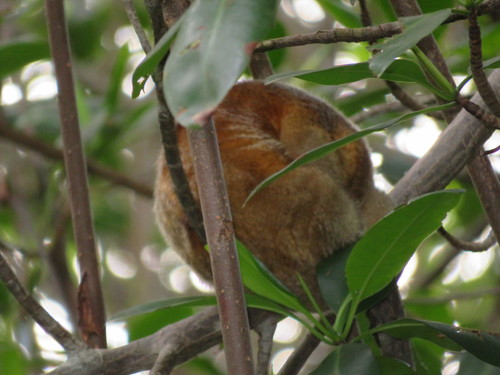
Common Silky Anteater
Cyclopes didactylus
CyclopedidaeThomas's Silky Anteater
Cyclopes thomasi
Cyclopedidae
Amboro Silky Anteater
Cyclopes catellus
Cyclopedidae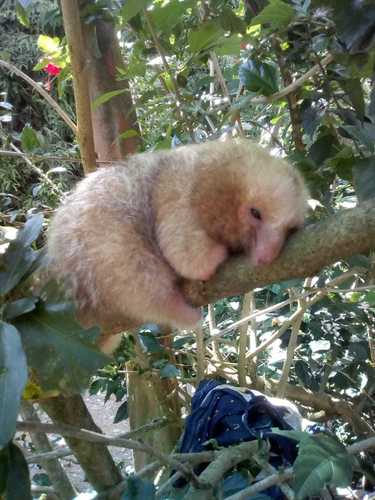
Central American Silky Anteater
Cyclopes dorsalis
Cyclopedidae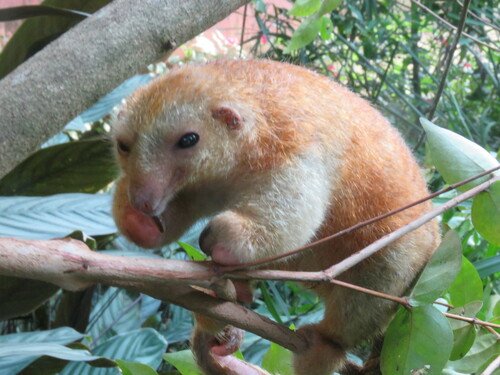
Red Silky Anteater
Cyclopes rufus
Cyclopedidae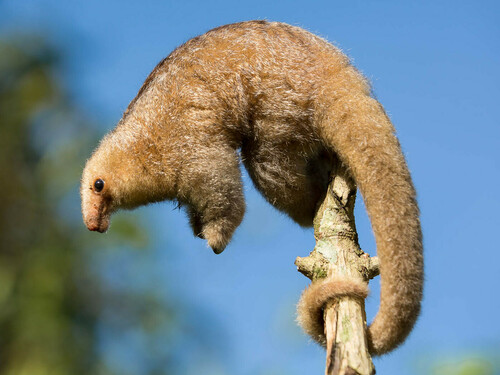
Xingu Silky Anteater
Cyclopes xinguensis
Cyclopedidae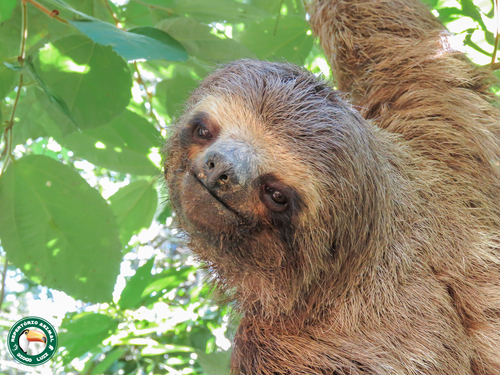
Brown-throated Sloth
Bradypus variegatus
Bradypodidae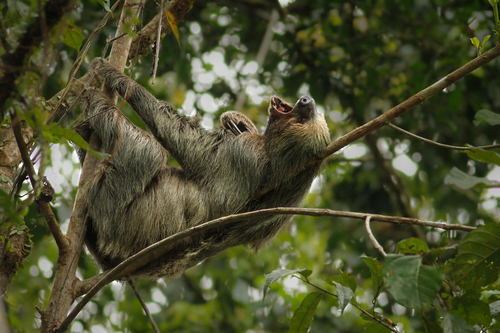
Linné's Two-toed Sloth
Choloepus didactylus
Megalonychidae